The Four Major National Shrines in Quebec
Saint Joseph’s Oratory of Mount Royal (Montréal)
- Significance: It is Canada’s largest church and the world's largest shrine dedicated to Saint Joseph.
- History: Founded in 1904 by Saint Brother André, a humble brother credited with thousands of miraculous healings.
- Features: Features a massive dome visible across Montréal, museum exhibits of nativity scenes, and the tomb of Brother André.
Basilica of Sainte-Anne-de-Beaupré (Sainte-Anne-de-Beaupré)
- Significance: Recognized as the oldest pilgrimage site in North America, attracting roughly one million visitors annually.
- History: Dating back to 1658, it was initially built by early French settlers to house a miraculous statue of Saint Anne.
- Features: Pillars at the entrance are covered in crutches and canes left behind by those who reported being miraculously cured. It also holds major sacred relics.
Shrine of Our Lady of the Cape (Trois-Rivières / Cap-de-la-Madeleine)
- Significance: It is the largest Marian shrine in North America, dedicated to the Virgin Mary.
- History: The historic old stone church was built in 1720. The shrine is famous for the 1879 "Miracle of the Ice Bridge," which allowed building materials to cross the frozen St. Lawrence River.
- Features: Includes the beautifully preserved 18th-century chapel, a large modern basilica completed in 1964, and extensive gardens facing the river.
Saint Anthony’s Hermitage (Lac-Bouchette)
- Significance: Known for its peaceful, natural setting, it is managed by Capuchin friars in the Saguenay–Lac-Saint-Jean region.
- History: Founded in 1907 by Father Elzéar Delamarre, it offers a more intimate, secluded retreat compared to the grand urban basilicas.
- Features: Tucked into the forest along Lac Ouiatchouan, it features an outdoor stone grotto, trails, a sacred chapel, and an on-site museum.
Saint Joseph’s Oratory of Mount Royal
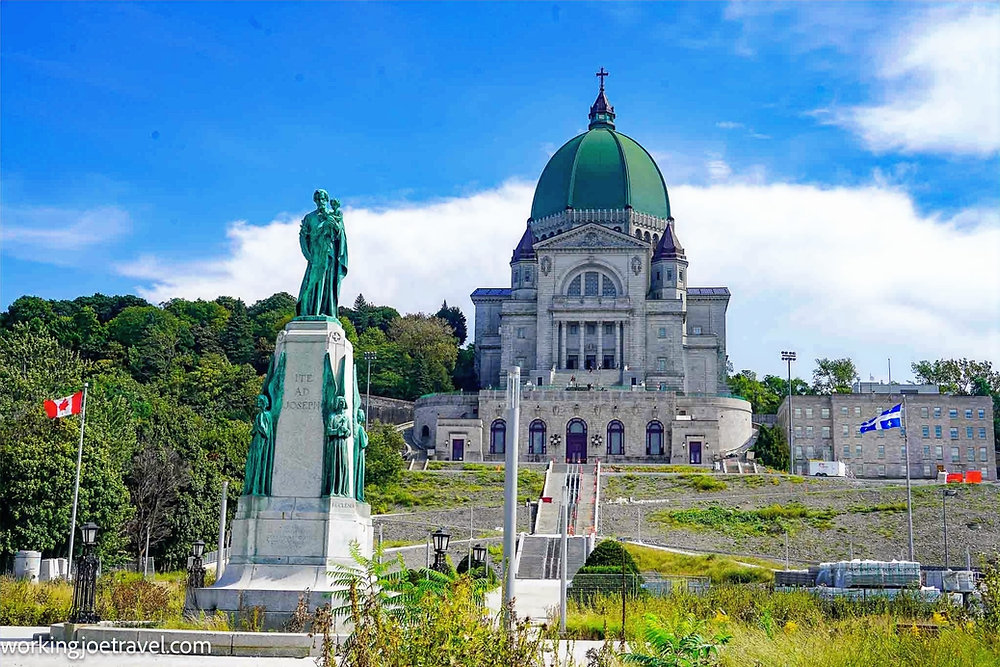
 The entire complex originated from the faith of a single man: Brother André Bessette. Living in the early 20th century, the humble Holy Cross lay brother gained international renown for his compassion and alleged spiritual healing gifts, which he attributed entirely to Saint Joseph.
In 1904, Brother André received permission to construct a tiny wooden chapel on the mountain that measured just 4.5 by 5.5 meters.
As word of his miraculous healings spread, millions of pilgrims began arriving. The overwhelming crowds sparked an ambitious construction project that spanned more than six decades. Though Brother André passed away in 1937—with over a million people attending his wake—work on the magnificent Italian Renaissance-style basilica continued, finally reaching completion in 1967. He was canonized as a saint by Pope Benedict XVI in 2010.
Saint Joseph, the Great Saint of Everyday Life
Joseph can be presented as the saint of daily life, whom one turns to for small concerns as well as during decisive moments in life. Saint Brother André had boundless trust in Saint Joseph, his friend and guide. His dream was to build a chapel for him on Mount Royal; an oratory to pray to him.
Crowds quickly flocked to this place. At Brother André’s recommendation, Saint Joseph is invoked as the “one who does not let anyone fall along the way.” Traditionally, Saint Joseph is entrusted with matters related to family, work, health, death, and material needs. Saint Joseph’ Oratory of Mount Royal, founded in 1904, is the largest shrine in the world dedicated to him.
The Sanctuary of Saint Anne de Beaupré
The Feast Day for Saint Anne, and therefore the Basilica of Ste-Anne-de-Beaupré, is July 26th.
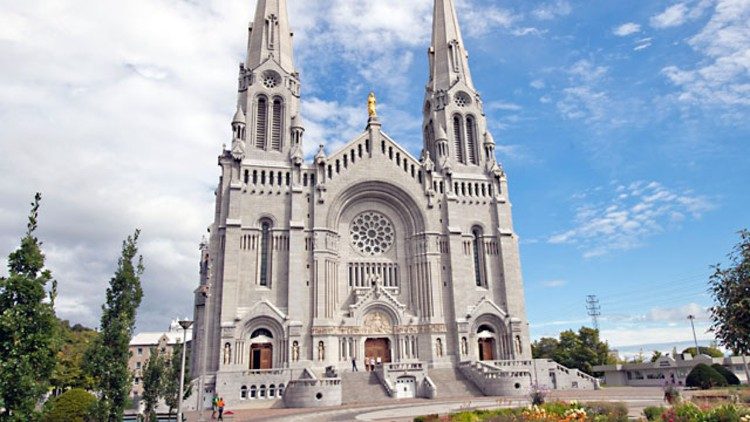
The Sanctuary of St. Anne de Beaupré is dedicated to the good St. Anne, the grandmother of Jesus.
The National Shrine of Sainte-Anne-de-Beaupré was established in 1658, after what many believed was a miraculous intervention by Saint Anne herself.
1658
Tradition holds that the crew of a small ship from Brittany, in France, was sailing up the St. Lawrence River to emigrate to Canada, when suddenly a storm arose in the night. Death was almost certain, but the Bretons on board prayed to the good Saint Anne – the grandmother of Jesus, who is venerated in Brittany, promising her a sanctuary if she would save them from their peril. By morning, their ship had drifted ashore, and a blue sky shone overhead.
Building the Shrine
The settlers with their boat found intact had miraculously landed near the current site. They decided to honour Saint Anne by building a shrine on the land they had received.
Miracles and Healing
Following Guimont's cure, the shrine's reputation grew as people reported experiencing various healings and cures, including from paralysis and blindness.
A Major Pilgrimage Site
The constant flow of people seeking miracles cemented Sainte-Anne-de-Beaupré as a significant pilgrimage destination and the oldest in North America.
The Basilica's Construction
Evolution from Shrine
The numerous reports of miracles led to the initial shrine being replaced by the majestic basilica that stands today.
Relics: A significant relic of Saint Anne, a portion of her forearm, was gifted to the shrine by Pope Leo XIII in 1892, further enhancing its sacred importance.
On 28 July 2022, Pope Francis celebrated mass at the basilica as part of his Apostolic Journey to Canada.
The Basilica OF SAINT ANNE-DE-BEAUPRE
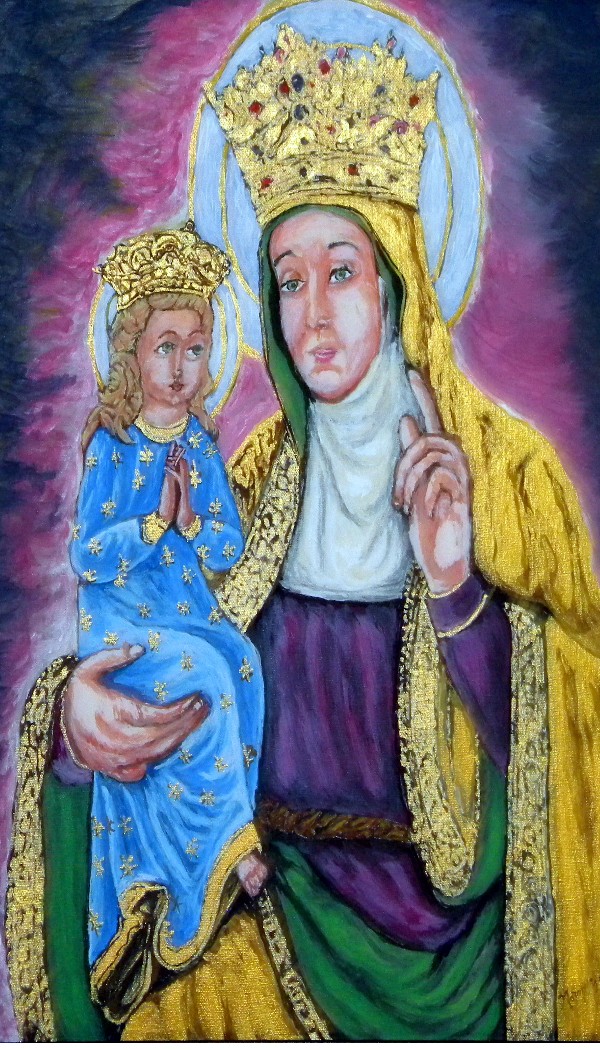
Daily Prayer to Saint Anne
 Oh glorious St. Anne you are filled with compassion for those who invoke you and with love for those who suffer. Heavily burdened with the weight of my troubles, I cast myself at your feet and humbly beg of you to take the present intention which I recommend to you in your special care. Please recommend it to your daughter, the Blessed Virgin Mary, and place it before the throne of Jesus, so that He may bring it to a Happy issue. Continue to intercede for me until my request is granted.
But, all, obtain for me the grace one day to see my God face to face, and with you and Mary and all the saints to praise and bless Him for all eternity. Amen.
The two miraculous statues of Sainte-Anne-de-Beaupré above
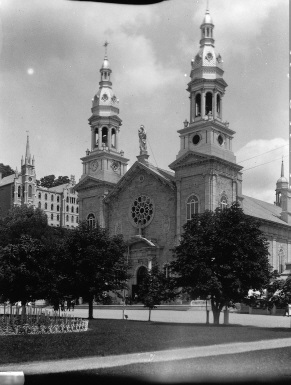
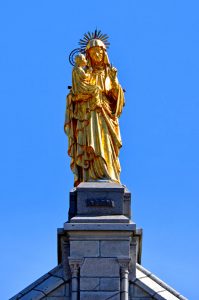
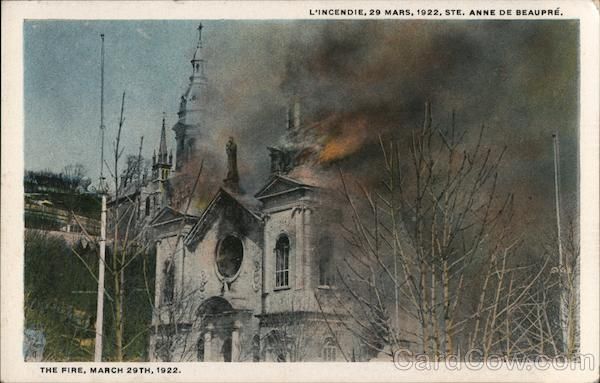
On March 29, 1922, the Basilica of Saint Anne de Beaupré, famous throughout North America as a place of pilgrimage and for the many miracles that were performed there through the intercession of Saint Anne, was struck by a great misfortune. A fire broke out in the morning, around 9:00 a.m. The fire spread quickly from the Juniorate to the presbytery and the sacristy. At 11 o’clock, the Juniorate, the presbytery and the sacristy were completely destroyed, and the fire was already beginning to spread inside the Basilica. At noon the towers of the Basilica collapsed as well as the walls of the church and the monastery. It was a total loss. Despite the great distress, a miracle occurred. The good St. Anne showed her dear grandchildren that she was still watching over them. This beautiful golden statue, which was on the façade and was made of wood, miraculously survived the flames. Nowadays, it is perched on the façade of the new Basilica.
Second miraculous statue
Inside the Basilica of Sainte-Anne-de-Beaupré, in the north transept, is another miraculous statue of Saint Anne. It is made of polychrome wood, sculpted in 1927 by Jules de Vischer, Brussels, Belgium. It is based on the model of a first miraculous statue produced in 1881 by the workshop Mathias Zens, whose successor was Jules de Vischer. This statue is said to be miraculous because many pilgrims have obtained favours, such as healings or conversions. It seems that the sanctuary records about forty miracles each year.