Saint Kateri Tekakwitha and Shrine
Saint Kateri Tekakwitha
 Background:
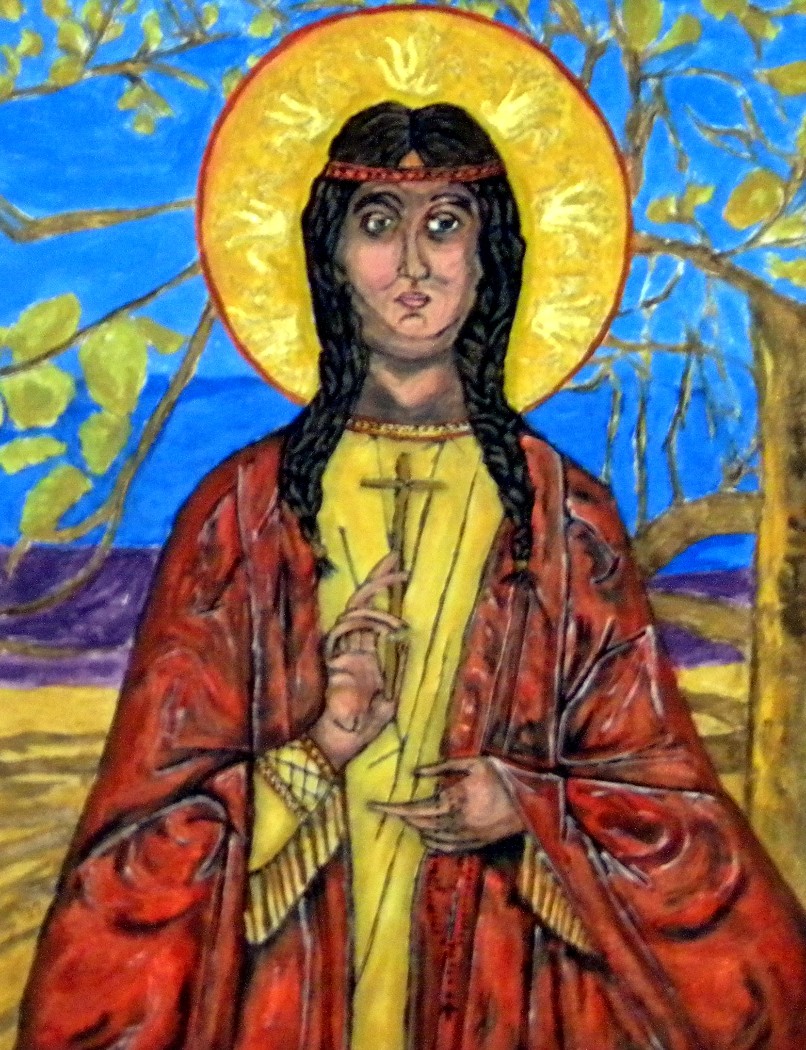
St. Kateri Tekakwitha, a Native American woman, lived from 1656-1680. She was born in the United States, but lived much of her life in Kahnawake, close to Montreal. She contracted smallpox as a four-year-old child which scarred her skin. The scars were a source of humiliation in her youth. At age 19, Kateri Tekakwitha was baptized and took a vow of chastity and pledging to marry only Jesus Christ. Her decision was very unpopular. To avoid persecution, she traveled to a Christian native community south of Montreal. Despite many hardships, Kateri had a very strong faith throughout her life. Her Feast Day is 17th April.
Background:
St. Kateri Tekakwitha, a Native American woman, lived from 1656-1680. She was born in the United States, but lived much of her life in Kahnawake, close to Montreal. She contracted smallpox as a four-year-old child which scarred her skin. The scars were a source of humiliation in her youth. At age 19, Kateri Tekakwitha was baptized and took a vow of chastity and pledging to marry only Jesus Christ. Her decision was very unpopular. To avoid persecution, she traveled to a Christian native community south of Montreal. Despite many hardships, Kateri had a very strong faith throughout her life. Her Feast Day is 17th April.
Kateri venerable in 1943; Pope John Paul II beatified her in 1980; Pope Benedict XVI canonized her on October 21, 2012.
Intercessory Prayer:
St. Kateri, Star of Native People and Bright Light for all! We thank God for your Heroic courage, constant perseverance and deep love of the Cross. Pray for us that our love for Christ may deepen. And may we imitate you in following God’s Will even when difficulties arise. In Jesus’ name we pray. Amen.
The Saint Francis Xavier Mission and Saint Kateri Tekakwitha’s Shrine
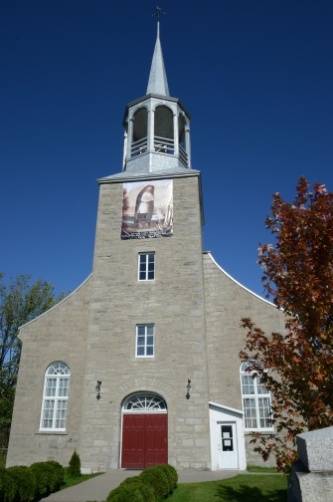
In the spring of 1680, a young Mohawk woman named Kateri Tekakwitha died in a small cabin in Kahnawake, her face ravaged by smallpox scars. Within minutes of her death, witnesses reported that her pockmarked skin became smooth and radiant. Word spread quickly: the woman they called the "Lily of the Mohawks" had died a saint.
In 1625, the first Jesuits settled in the Saint Lawrence Valley and started establishing missions in various allied indigenous communities of the French, such as the Wendats or the Innus. However, relations with the Haudenosaunee (or Iroquois) and the French were strained or hostile for a long time; this is one of the reasons why the Jesuit missionaries could not establish themselves in these communities to work there on a more long-term basis. In the 1650s, some Jesuits such as Fr. Chaumonot went on reconnaissance trips to see if it was possible to establish missions, which was eventually done over the following years.
The Jesuit mission of Saint Francis Xavier changed places several times. This mission was first set up in 1667 in Kentake (known today as La Prairie). The Kanien'keha:ka (Mohawks) who lived there then moved four times from their village for economic, agricultural or political reasons. Kahnawake was not established in its present location before 1716. The church was erected four years later, followed by Fort Saint-Louis in 1725; in fact, a wall of stone that was part of this fort can still be seen today. According to historian Jean-François Lozier, the missionaries exercised a form of leadership whilst also following the decisions and needs of the community. Many of the community’s inhabitants had converted to Catholicism, namely an indigenous Catholicism.